Current Projects
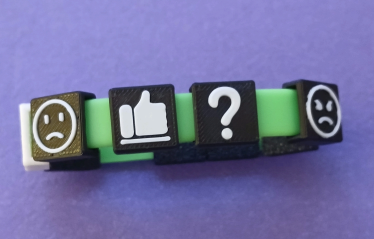
3D-Printed Wearable Bracelets
Collaboration with WATAP and WOOF3D
Collaboration with WATAP and WOOF3D.(with links to their sites)
This project focuses on developing accessible, customizable 3D-printed bracelets that support communication, sequencing tasks, daily reminders, and mindfulness prompts for adults with ID/DD. The bracelets are designed to be low-cost, low-tech, and fully open-access, making them easy to reproduce and adapt.
We are currently working on:
- Mapping locations of community-based 3D printers to increase access
- Testing the bracelets in a variety of real-world settings
- Gathering feedback from participants, job coaches, and service providers
- Iterating on designs to improve usability, durability, and functionality
These bracelets aim to promote independence, self-advocacy, and inclusion by offering a simple, customizable tool that can be used across home, work, and community environments.
Mindfulness & Stress Management Telehealth Group
Funded by a gift from Foundry10
This project is a telemedicine-based group intervention for adults with ID/DD that focuses on mindfulness, stress management, and emotional regulation. The group is voluntary, and sessions emphasize accessible strategies that participants can use in daily life.
We are currently gathering feedback on:
- The feasibility of delivering mindfulness content via telehealth
- The acceptability of the format and session structure
- Participant experiences, preferences, and perceived benefits
- Input from participants, job coaches and supporters regarding implementation and impact
The goal is to understand how telehealth-based mindfulness groups can best support adults with ID/DD and to refine the approach based on lived experience and stakeholder feedback.
High School Transition Program Initiative
Funded by a gift from Foundry10
This initiative is designed to strengthen employment pathways for transition-age youth with intellectual and developmental disabilities by combining skill-building, family support, and paid community-based work experiences. The program is delivered in two structured eight-week phases involving both parents/caregivers and students.
Phase 1: Family and Student Preparation (8 Weeks)
We provide weekly sessions with parents and caregivers covering key transition topics such as:
- Guardianship and supported decision-making options
- Housing pathways and community living supports
- Accessing adult services and understanding DDA processes
- Medicaid, SSI, and other benefits navigation
During the same period, students participate in sessions focused on:
- Skill and interest discovery
- Workplace expectations and social skills practice
- Self-advocacy and communication
- Identifying strengths and potential career paths
Phase 2: Paid Community Internships (8 Weeks)
Following the preparatory phase, students engage in paid internships in the community that align with their interests and strengths. Job coaches provide on-site support, and both students and employers offer ongoing feedback to strengthen workplace readiness and identify future employment opportunities.
The initiative emphasizes early work experience, family engagement, and interagency collaboration to support successful transitions to adult life and competitive integrated employment.